
The Molecular Blueprint: Chemistry's Central Role in Sustainability and the SDGs
Published on: 08 Dec 2025
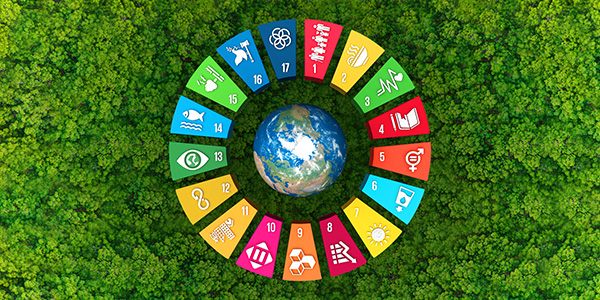
The global pursuit of sustainability, framed by the United Nations' Sustainable Development Goals (SDGs), is not just a geopolitical or social challenge but a profound chemical enterprise. Chemistry, the science of matter and its transformations, provides the fundamental language to diagnose environmental crises and the innovative toolkit to engineer solutions. From the molecular design of clean energy systems to the creation of circular material life cycles, advancements in chemical science are directly instrumental in turning the ambitions of the SDGs into tangible reality.
The SDGs themselves are a blueprint interwoven with chemical imperatives. SDG 6 (Clean Water and Sanitation) relies on advanced chemical processes like photocatalysis and nanofiltration to remove micropollutants. SDG 7 (Affordable and Clean Energy) is being revolutionized by the electrochemistry of fuel cells and the materials science behind high-efficiency perovskite solar cells and next-generation batteries. Crucially, SDG 12 (Responsible Consumption and Production) and SDG 13 (Climate Action) demand a transition from a linear, waste-generating economy to a circular, low-carbon one. This transition is powered by Green Chemistry—a philosophy of designing products and processes that minimize hazard and waste, thereby addressing environmental problems at their molecular root.
This chemical revolution is most visible in the sustainable alternative products emerging worldwide. These are not merely "natural" substitutes but are sophisticated materials engineered for minimal environmental impact across their entire life cycle.
A prime example is the development of bioplastics, such as Polylactic Acid (PLA). Derived from renewable biomass like corn starch, PLA is a polyester whose chemical structure is designed for biodegradability under specific conditions. Through hydrolysis, its ester backbone breaks down into lactic acid, offering a potential end-of-life solution distinct from the centuries-long persistence of petroleum-based plastics. This directly tackles the plastic pollution crisis highlighted in SDG 14 (Life Below Water).
Furthermore, the principles of Green Chemistry are replacing hazardous industrial substances. Volatile organic compounds (VOCs), notorious for their toxicity and environmental persistence, are being superseded by solvents like ionic liquids—salts with negligible vapor pressure—and supercritical CO2, a tunable and non-toxic alternative. In the construction sector, a major CO2 emitter, geopolymer concrete is formulated by chemically activating industrial waste products like fly ash. This process occurs at near-ambient temperatures, creating a durable binder with up to 80% lower carbon emissions than traditional Portland cement, contributing significantly to SDG 9 (Industry, Innovation, and Infrastructure).
However, the path is fraught with complex challenges. The sustainability of bioplastics is contingent on robust industrial composting infrastructure and raises questions about land-use competition with food crops. The true "greenness" of any alternative product must be validated through a full life-cycle assessment, evaluating its environmental footprint from raw material extraction to final disposal.
In conclusion, the journey toward achieving the Sustainable Development Goals is being written in the language of molecules. By harnessing the creative power of chemistry—particularly the tenets of Green Chemistry—we can redesign the material foundation of our society. From creating benign, biodegradable polymers to developing efficient systems for renewable energy and carbon capture, chemistry provides the molecular blueprint for building a sustainable, circular, and harmonious future.